
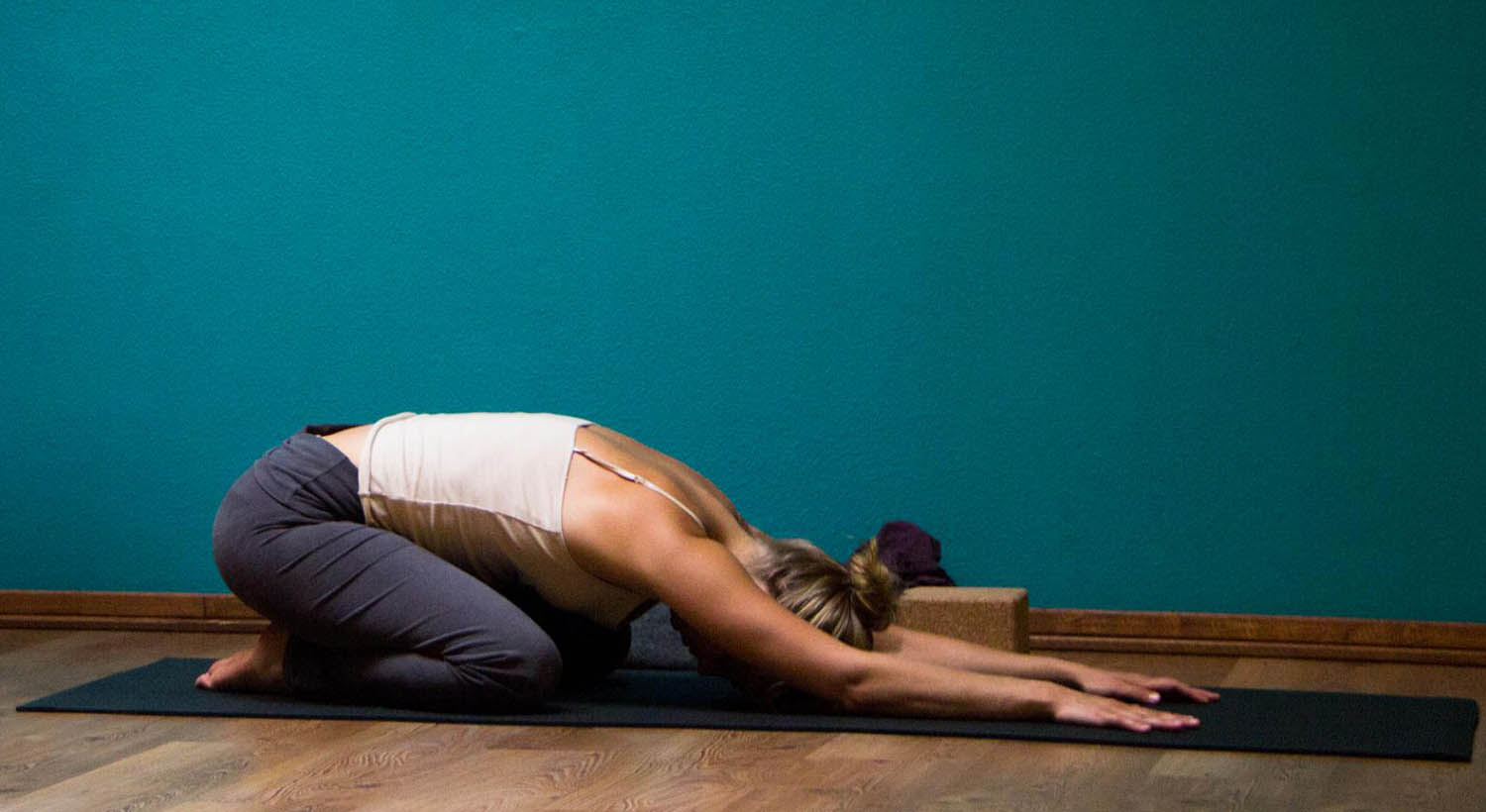
The good news is that yoga has been found effective for treating low back pain. You don’t need to suffer.
I am going to share you with you my 3 go-to yoga practices for my own lower back and for my clients.
These practices can be used as warm-ups to a full yoga practice as well as cool down, or “oops I over did it and need a little TLC” post work-out. Some of you may LOVE to do these after sitting at a desk or after commuting in traffic with not so yogic types on the road!
Back pain can range from dull and mild to sharp and severe. It can also have a variety of causes, some of which can be quite serious, so I do recommend that if your back pain is chronic or more severe, see a qualified yoga therapist and a health care provider.
Many people find that the balanced practice of a general yoga class will bring relief to their achy backs. Others may need to see an experienced yoga teacher or yoga therapist to be sure that they are practicing correctly so that they do not stress their backs.
In any case, I think you will like these simple practices that are accessible to beginners as well as seasoned yoga practitioners.
The three yoga for back pain practices I use most often are: belly breathing, pelvic tilts and knees to the chest.
Seasoned yoga students and even yoga teachers benefit from these basic practices. These are great practices for beginners too! For more beginner yoga practices check out these 5 Truly Beginners Yoga Poses.
Please read all of the directions first before trying even these simple moves as even they potentially could aggravate someone’s already injured low back if not practiced properly.
Beginning with breathing can help you to distress – which may be all your back needs!
Cautions: Don’t get frustrated if it doesn’t feel natural at first. To get the hang of it, you can try pushing your belly up as you inhale and contract it in as you exhale a few times. However, you can also just take some deep relaxing breaths. After all, we are trying to relax and feel good here!
Benefits: Reduces back tension and discomfort. Reduces stress, which slows down the heart rate, increases digestion, improves the immune function, and reduces inflammation, plus centers and focuses you. Improves mood.
Variation: You can practice on your bed – especially nice to do if getting down to and up from the floor is challenging.
Tips: You can place a bolster or pillow under your knees and let your legs simply relax. If you feel you would like some neck support, you can place a small pillow or rolled-up towel under your neck. Just be careful to not lift your head too high, which will take your spine out of its natural alignment.
This is supposed to feel wonderful, so play with it and don’t get too serious so you can enjoy the moment! Try to keep your attention on the breath as you practice. When your mind wanders, bring it back to your breath – over and over again!
I like to call these baby core strengtheners, but they are also really good at releasing tension from the lower back. They can be done by themselves, as a warm-up, cool down or even in the middle of your practice if you feel like your back is getting tight and needs a break.
There are two ways to tilt your pelvis – under curve, or over curve.
You will be learning the under curve pelvic tilt to help release tension in your lower back and warm it up.
Variation: If your back is healthy and it would feel good you can add over curve pelvic tilts. When you inhale instead of bringing the low back to neutral you can slightly arch.
Cautions: It is possible to press the lower back into the floor and not tilt your pelvis. When this happens the belly is expanding upwards as the back presses down. You will not get as much benefit.
Benefits: I call this a baby core strengthener as it does help tone abdominal and other core muscles. It also helps to relax tense muscles. Especially when combined with the focus on the breath it helps to reduce pain and inflammation – a common contributor to back problems.
Tip: To deepen your pelvic tilt, try to draw your pubic bone closer to your chin. Keep your buttocks and back on the floor. Try to feel as though your breath and your movement are one – a flowing wave like motion.
Bringing your knees to your chest is both a great warm-up as well as cool down or counter pose to do along with a traditional yoga practice.
Variation: Your opposite leg can straighten out and relax completely. Or it can straighten out and you can flex your foot so the straight leg is active.
Cautions: Be sure to come in and out of the position as directed. Never fling the legs into position or rush as that can cause the lower back to tense.
Benefits: Releases tension in the lower back, hips and thighs. Focus on the breath helps to reduce stress. Observing the body enhances body awareness which can help you better keep your body safe during your yoga practice and daily activities.
Tips: You can hold the leg on top of the upper leg, but this is harder on the knee joint, but may be necessary if it puts too much pressure on your fingers or hands. You can use a strap on your leg to draw the knee to the chest if the arms have trouble reaching or if reaching with the arms lifts or tilts your head off the floor.
Bori Colony, Marol, Andheri East Mumbai, Maharashtra 400047.
Phone:
+91-7373380029
Email: